

Open Bank Account Turkey Foreigner Guide
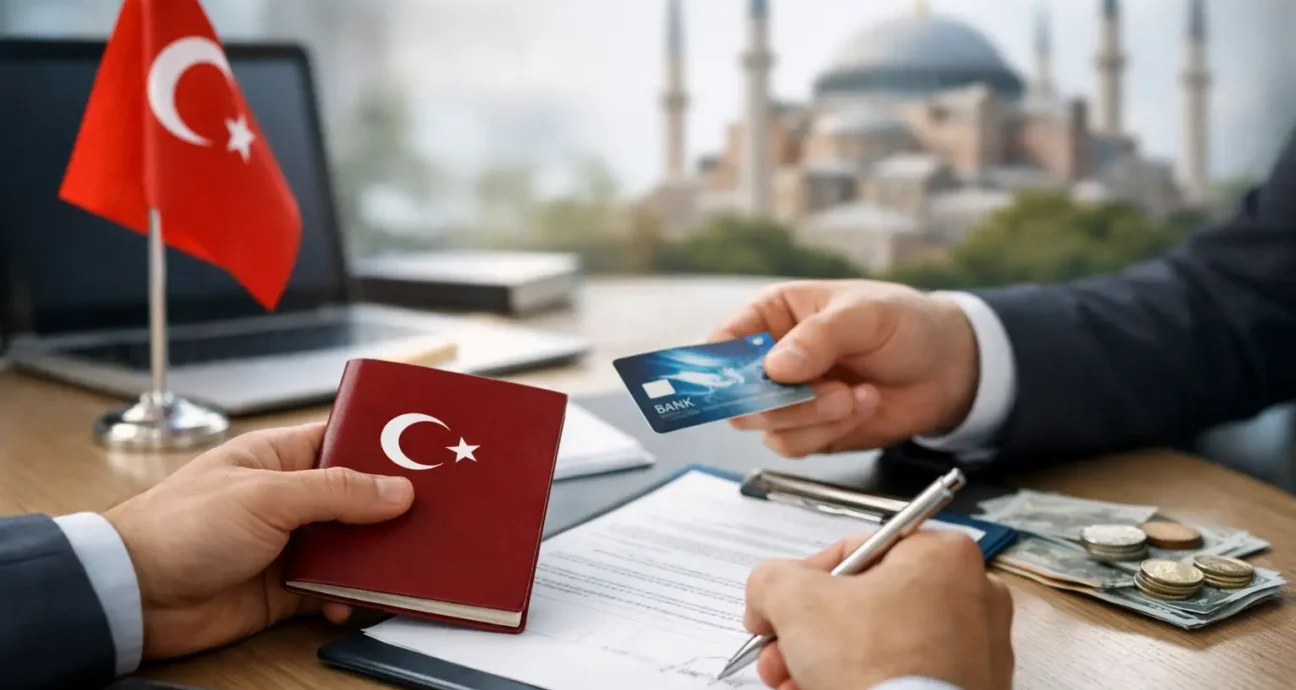
Walking into a Turkish bank without the right document can turn a simple errand into three visits, two translations, and a lot of guesswork. If you need to open bank account Turkey foreigner, the process is usually possible, but it is not identical at every bank branch. Your nationality, visa status, proof of address, and even the type of account you want can change what the bank asks for.
Can a foreigner open a bank account in Turkey?
Yes, in many cases a foreigner can open a personal bank account in Turkey. The practical answer, though, is less simple than the legal one. Some banks are comfortable onboarding non-residents, while others prefer customers who already hold a residence permit, local tax number, and Turkish address.
That difference matters because people often hear conflicting advice. One foreigner opens an account with only a passport and tax number, while another is told to come back with a residence card, utility bill, and notarized translation. Both experiences can be real. Bank policy, branch practice, compliance checks, and your profile all play a role.
If you are a student, property buyer, entrepreneur, or recent arrival trying to manage rent, bills, tuition, or a real estate payment, it helps to approach the process as a documentation issue first and a banking issue second.
Documents usually needed to open bank account in Turkey as a foreigner
Most banks start with the same core set of documents. Your passport is the basic identity document. In many cases, the bank will also ask for a Turkish tax identification number, sometimes called a vergi numarasi, even if you are not employed in Turkey.
A residence permit is often requested, especially for full-featured current accounts, debit cards, internet banking access, or accounts expected to handle larger or recurring transactions. Some branches may accept a foreign address for non-residents, but others want proof of local address in Turkey. That proof might be a rental contract, a utility bill, or an address registration record, depending on the bank.
You may also be asked for a Turkish mobile number. This is not just a convenience issue. Banks use SMS verification for account access, security approvals, and online banking setup.
If your documents are not in Turkish, the bank may ask for a notarized translation. This is more common when there is ambiguity in names, addresses, or identity details, or when internal compliance staff require a standardized format.
The tax number question
For many foreigners, the Turkish tax number is the first practical step. It is commonly needed not only for banking but also for property transactions, some utility connections, and other administrative processes. Even if a bank says it can review your application without one, having it ready usually makes the conversation easier.
Residence permit or no residence permit?
This is where expectations often break down. Some foreigners assume a tourist visa is enough. Sometimes it is, especially for limited banking purposes or at branches used to dealing with international clients. But many banks now apply stricter compliance rules and prefer customers with a residence permit.
If you do not yet have one, it does not automatically mean you cannot open an account. It means you should be prepared for bank-by-bank differences and possible rejection at one branch even if another branch would accept your file.
Why banks in Turkey ask for different things
From the outside, inconsistent document requests can feel arbitrary. In practice, banks are balancing banking regulations, anti-money laundering controls, internal risk policy, and branch-level discretion.
That is why one branch may insist on proof of address while another focuses on income source or account purpose. A bank may also distinguish between a simple deposit account and an account that includes cards, foreign currency services, or international transfers.
Foreign nationals from some countries may face extra checks. So can customers expecting to receive high-value transfers, use the account for company activity, or move funds connected to property purchases. None of this automatically means a problem. It just means the bank may want a clearer paper trail.
What the process usually looks like
In straightforward cases, the process is fairly short. You visit the branch with your documents, complete customer identification forms, provide your tax number and contact details, and sign account agreements. If approved, the bank opens the account, assigns an IBAN, and may issue a debit card immediately or send it later.
Online banking setup can happen at the branch, but some banks delay activation until a local phone number is verified. If the account is in foreign currency, you may be able to open USD, EUR, or GBP sub-accounts under the same customer profile.
The main delay point is not the form signing. It is document review. If the branch has to escalate your file internally, ask for translation, or confirm your address, the process can stretch from one day to several business days.
Common problems foreigners face
The most common issue is assuming that every branch follows the same rulebook. A second problem is arriving with only a passport and no tax number, local phone number, or address document. Even if the bank could technically proceed, the staff may not want to push an incomplete application through compliance review.
Another frequent issue is mismatch in names across documents. If your passport spelling, tax number registration, and phone line registration do not line up, the bank may pause the application. This is especially relevant for users with middle names, dual surnames, or different transliterations.
There is also the question of purpose. If you say you want an account for daily living expenses, that is different from receiving business payments, collecting rental income, or moving funds for a property closing. Banks may treat those uses differently and ask for supporting documents.
Choosing a bank as a foreigner in Turkey
The best bank is not always the one with the biggest name. For foreigners, practical access matters more. A branch with staff used to English-speaking customers can save time. So can a bank that has clear procedures for non-residents or international students.
It is worth asking in advance whether the branch opens accounts for foreigners without residence permits, whether a Turkish phone number is mandatory, and whether foreign currency accounts are available under the same application. These are small questions, but they prevent wasted trips.
If your needs are simple, such as paying rent and receiving local transfers, almost any suitable personal account may work. If you need international transfers, multi-currency support, or regular incoming funds from abroad, fee structure and compliance responsiveness matter much more.
Open bank account Turkey foreigner – what to prepare before you go
The easiest way to reduce friction is to prepare for the strictest version of the process, not the easiest one you saw mentioned online. Bring your passport, tax number, residence permit if you have one, proof of address, and a Turkish mobile number if available. If there is any doubt about document language, ask whether a notarized translation is required before your appointment.
It also helps to be ready to explain why you need the account. A simple, consistent explanation can move the discussion forward quickly. For example, you may need it for salary payments, tuition, apartment rent, property purchase expenses, or living costs during your stay in Turkey.
If one branch refuses, that does not always settle the issue. Another branch of the same bank may interpret internal policy differently, especially in larger cities where foreign customer volume is higher. Still, repeated refusals usually signal a real documentation gap, not just bad luck.
A note on legal and practical expectations
Opening a bank account is partly an administrative task and partly a compliance review. That is why informal advice from friends or forums should be treated carefully. Rules change, branch practice changes, and what worked six months ago for one nationality may not work today for another.
For foreigners using Turkey’s legal and administrative systems, it helps to keep copies of all supporting documents and approach each step with the expectation that you may need to prove identity, address, and purpose more than once. That is frustrating, but normal.
If you are unsure which document is missing or why a bank rejected your application, clarity usually comes from narrowing the question. Was it your residency status, your address proof, your tax number, or the intended use of the account? Once you identify the real point of friction, the next step becomes much easier.
A bank account in Turkey can make everyday life far simpler, but the fastest path is rarely guessing. Go in prepared, ask direct questions, and treat branch differences as part of the process rather than a sign that something has gone wrong.