

Marriage Registration in Turkey for Foreigners
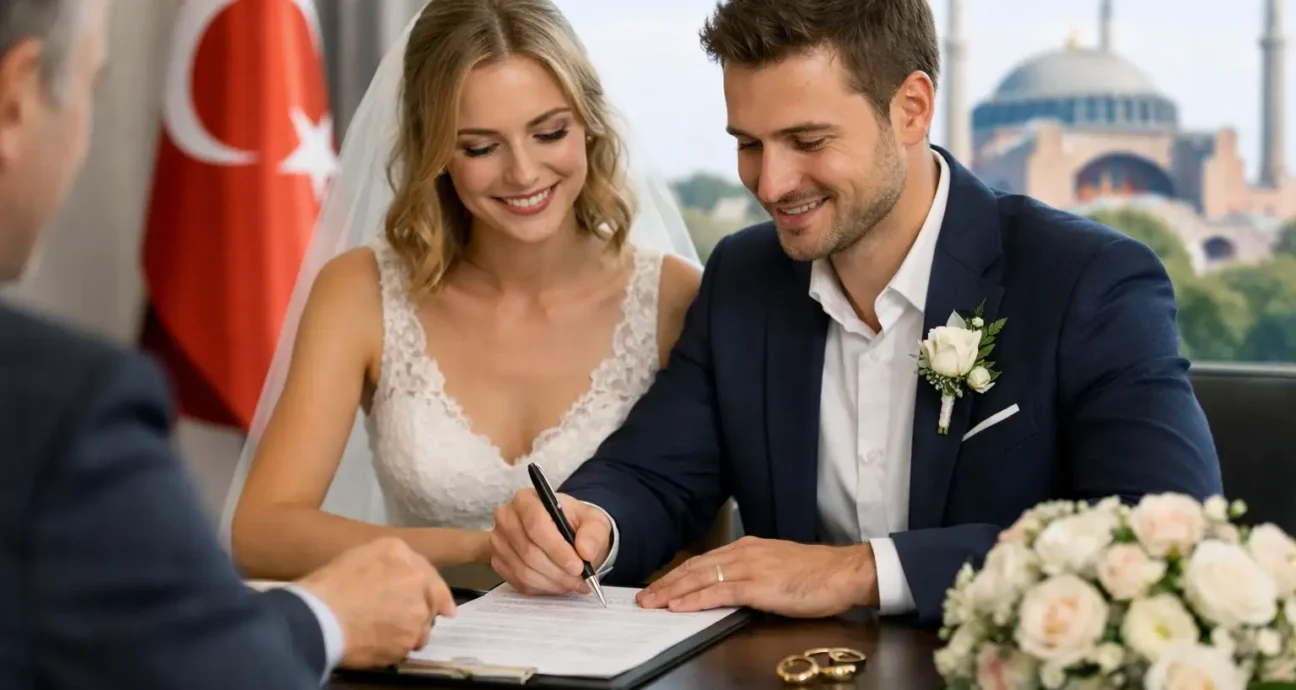
If you are planning a wedding in Turkey, the romantic part is usually the easy part. The harder part is marriage registration in Turkey for foreigners, because the process depends on your nationality, your documents, and the local marriage office handling your file. A couple can be fully ready to marry and still lose time over one missing certificate, one expired apostille, or one translation that was not accepted.
That is why it helps to think about the process in two parts. First, you prove that both people are legally free to marry. Then, you complete the local municipal procedure with the required forms, health checks, and identification documents. The basic path is manageable, but the details can change from one case to another.
How marriage registration in Turkey for foreigners works
In Turkey, civil marriage is handled through the local marriage office, usually connected to a municipality. Religious ceremonies can be meaningful to a couple, but the legally recognized marriage is the civil one. If you want your marriage to be valid under Turkish law, you need to complete the official municipal procedure.
For foreigners, the central issue is documentation. Turkish authorities generally want to see proof of identity, proof of marital status, and documents showing there is no legal barrier to the marriage. In many cases, these documents must be translated into Turkish and either notarized, apostilled, or legalized, depending on the country that issued them.
This is where people get confused. There is no single universal foreigner checklist that applies perfectly to every nationality. A document accepted from one country may need different authentication from another. Some local offices are stricter than others about format, validity dates, and translation practice. So the safest approach is to confirm the municipality’s current requirements before you book anything.
Who can get married in Turkey
In general, two foreigners can marry in Turkey, and a foreigner can also marry a Turkish citizen in Turkey. What matters is legal capacity. Both parties must meet age requirements and must not already be married to someone else. Close family relationships that create a legal barrier will also prevent registration.
If one or both parties are divorced or widowed, additional records may be required. A final divorce judgment, death certificate of the former spouse, or updated civil status document may be needed to show that the prior marriage has legally ended. For some applicants, especially those with recent divorces, the timing matters. A local office may ask for particularly current records.
Documents commonly required
Most marriage offices ask for a similar core set of documents, even if the exact names differ. Foreign applicants are often asked to provide a passport or national ID, birth certificate, certificate of no impediment or proof of single status, passport photos, and an application form issued by the marriage office.
If a foreign document is not in Turkish, a sworn translation is usually required. In many cases, the original document must also carry an apostille or consular legalization so the Turkish authorities can treat it as officially authenticated. Whether apostille is enough depends on whether the issuing country is part of the relevant international convention. If it is not, consular legalization may be required instead.
Some municipalities also request a residence-related record, though this is not always framed the same way. If you are staying in Turkey on a residence permit, bring it. If you are in Turkey as a visitor, ask the local office whether your passport entry record is enough. Requirements can differ.
The certificate of no impediment matters most
For many foreigners, the document that causes the most delays is the certificate showing you are free to marry. Different countries issue this in different forms. It may be called a certificate of no impediment, certificate of celibacy, single status certificate, or something similar.
The problem is that not every country issues this exact document. If your country does not, the Turkish authorities may accept an alternative record or a consular declaration, but that depends on practice at the local level and the nationality involved. This is one of the first questions to clarify before collecting anything else.
Translation and notarization can make or break the file
A document can be genuine and still be rejected if the translation process was not done correctly. Some offices want translations from a sworn translator and notarization in Turkey. Others may focus mainly on the underlying authentication of the original. Because of that, couples should avoid assuming that any translated copy will work.
Keep the timing in mind too. Civil status records often need to be recently issued. A certificate obtained many months ago may be refused, even if it was valid when issued.
Step-by-step process at the local level
Once your documents are ready, the process usually starts with an application to the marriage office in the municipality where the marriage will be registered. The couple submits the paperwork, fills out the required forms, and schedules the ceremony date if the file is accepted.
Turkey commonly requires a health report before marriage. This is a practical part of the process, not a sign that there is a problem with your application. The marriage office usually tells couples where this can be done and what form is needed. Some reports can be obtained through public health providers or designated medical units.
If one party does not speak Turkish, an interpreter may be required during the application or ceremony. This is especially relevant when the official needs to be sure both people understand the legal act of marriage. Some municipalities will tell you whether they can arrange this or whether you need to bring your own sworn interpreter.
After approval, the civil marriage ceremony takes place before the authorized official. Once completed, the couple receives the marriage certificate or family record document issued under Turkish procedure. That document may later need apostille or legalization if you intend to use it in another country.
Common issues foreigners run into
The biggest mistake is treating the process as a single national rulebook. Turkish law provides the framework, but municipal practice affects how that framework is applied day to day. One office may clearly explain what is needed for your nationality. Another may ask for additional supporting records.
Another common issue is last-minute travel planning. Couples sometimes arrive in Turkey expecting to marry within a few days, only to find that a required document must be obtained from abroad, legalized, translated, and notarized. If your country issues civil status documents slowly, this can disrupt the entire schedule.
Name consistency is another quiet problem. If your passport, birth certificate, and single status document show your name in slightly different ways, the office may ask questions. Even small differences in spelling, middle names, or date format can create delay. Check every document together before filing.
Divorce records also deserve extra attention. If you were divorced outside Turkey, the office will want clear evidence that the divorce is final. In some cases, recognition issues can matter later for other legal procedures, especially if you are also dealing with residence, inheritance, or family registration questions.
After the marriage is registered
Marriage in Turkey does not automatically update your status in every other country. If you need the marriage recognized abroad, you may have to register it with your home country’s authorities, consulate, or civil registry. That is a separate step from the Turkish marriage itself.
If one spouse plans to apply for residence in Turkey based on marriage, that is also a separate legal process. The marriage certificate helps, but immigration status, address registration, and supporting documents still matter. Marriage does not erase other legal requirements.
This is also the point where document copies become important. Keep certified copies, translations, and proof of authentication in a safe place. They may be needed later for visas, surname changes, insurance, banking, property transactions, or children’s records.
A practical way to prepare
Start with the marriage office where you plan to marry, not with assumptions from social media or a travel forum. Ask what they require for each person’s nationality, whether documents must be recent, whether apostille is enough, and whether translations must be completed in Turkey.
Then work backward from your intended ceremony date. Give yourself time for international document requests, consular appointments, translation, and unexpected corrections. If your case involves divorce, widowhood, dual nationality, or documents from more than one country, build in extra time.
For foreigners using legal information platforms like Attorkey, the most useful approach is to treat the process as document management, not just wedding planning. When the paperwork is organized early, the marriage registration process becomes much less stressful.
A good plan is simple: verify the local requirements, prepare the right civil status documents, and leave room for translation and authentication. That small amount of caution can save you from the kind of delay that only appears when you are already standing at the marriage office counter.